
Termite signs · Tucson, AZ
Signs of Termites to Look For Around a Tucson Home
Dirt tunnels on the foundation, wings by a window, tiny pellets under the trim: here is what each sign means and what to do when you find one.
Found something? Leave it where it is and call. Every estimate is free.
- Free, no-obligation estimates
- Whole job quoted before we start
- We show up when we say we will
What to look for
Signs of termites in and around a home
Termites leave a short list of signs: mud tubes, swarmers and the wings they drop, frass, and wood or paper that has gone hollow or been eaten.
A colony works inside walls, floors and framing for months or years before any of these shows up, so by the time you spot one, the termites have usually been there a while.
Here are the six signs to look for, and where each one turns up:
-
Mud tubes
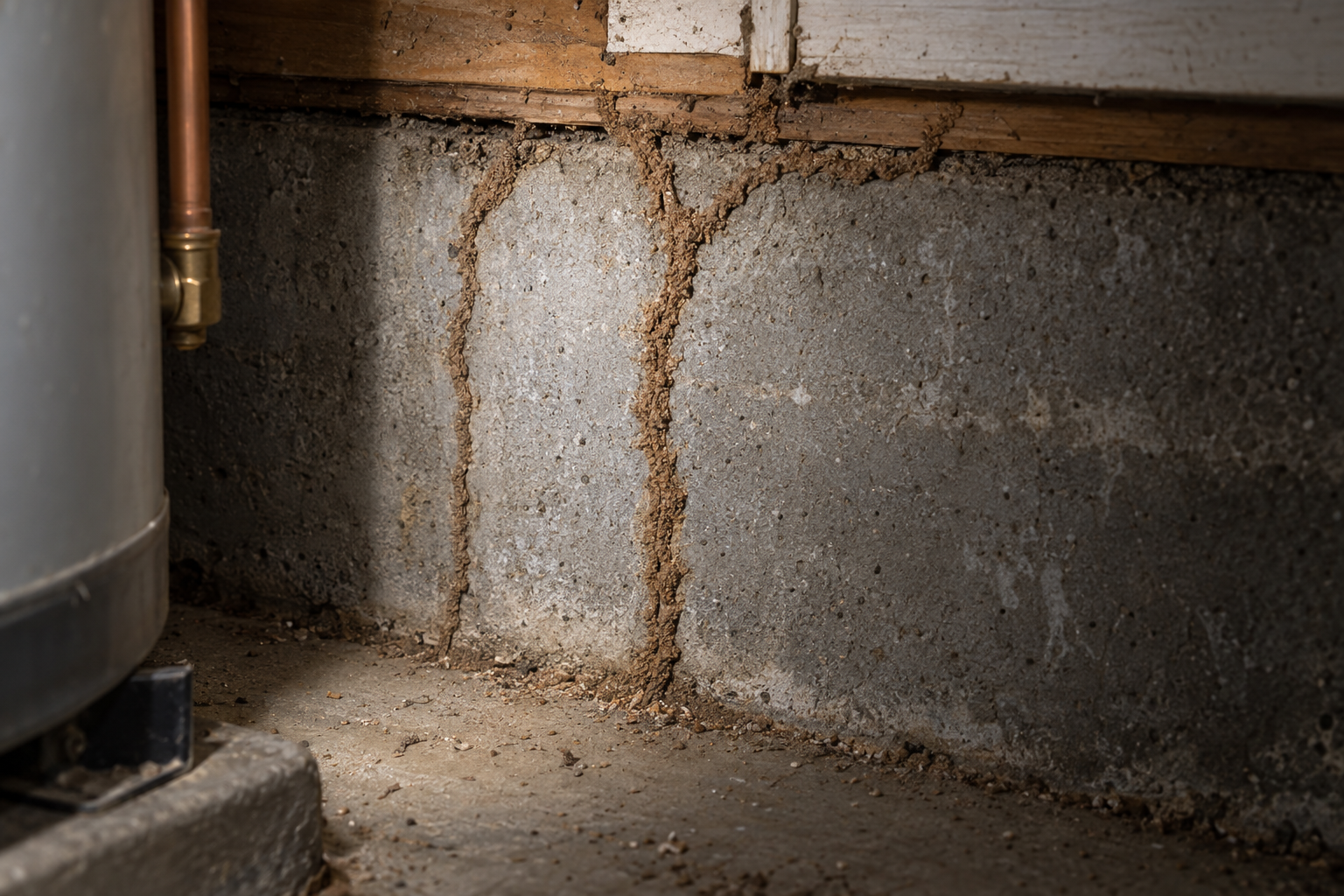
Dirt tunnels about the width of a pencil, running up the foundation, a stem wall or the slab edge in the garage.
What they mean -
Swarmers
Winged termites that come out in a group, usually toward a window or a light, and get taken for flying ants.
What they mean -
Discarded wings
Little piles of matching wings on a sill, in a light fixture or along the floor, left once the swarmers drop them.
What they mean -
Frass
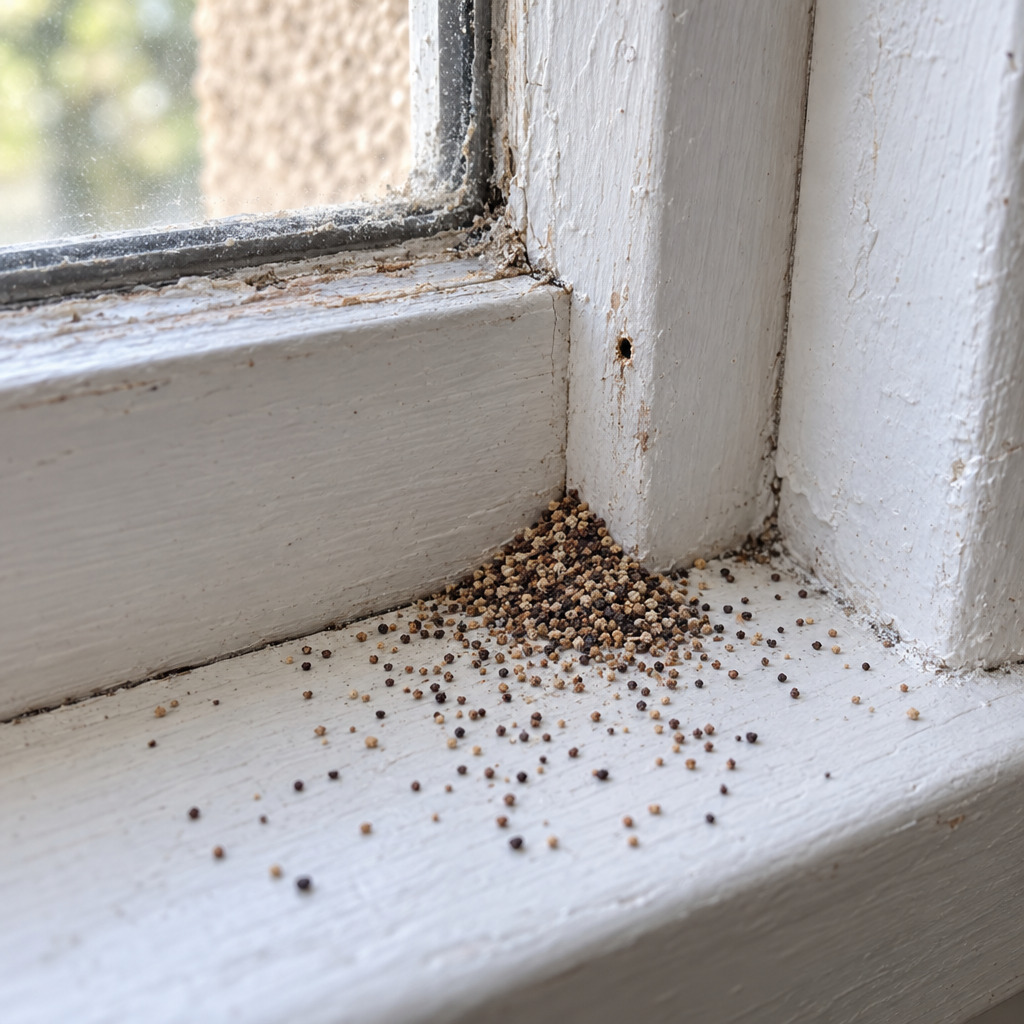
Tiny hard pellets that look like salt and pepper, piling up under wood that drywood termites are eating.
What it means -
Hollow wood
Trim, door frames or flooring that sound hollow when you tap them, or feel soft under your thumb.
What it means -
Damaged paper
Boxes, books and papers stored against a wall or on a closet floor with edges eaten away.
What it means
On the foundation
Mud tubes on the foundation
Mud tubes are pencil-width tunnels that subterranean termites build out of soil, running from the ground up the foundation to reach the wood above it.
The tube keeps the termites out of the dry air and out of sight while they travel between the colony in the soil and the wood they feed on. People call them dirt tunnels or termite tunnels; in the trade they are "mud tubes", and they are one of the clearest signs of an infestation. They start wherever soil meets the house, and worst of all where there is "wood-to-soil contact".
The places to check for them first are these:
- The stem wall and foundation outside
- Slab edges and cracks in the garage
- Water heater and plumbing closets
- Behind cabinets on an outside wall
By the windows
Swarmers and discarded wings
Swarmers are the winged reproductive termites that leave a mature colony to start new ones, and a pile of shed wings near a window is often all that is left of them.
Most people call them flying termites or mistake them for winged ants; in the trade they are "swarmers". They fly toward the light, drop their wings once they land, and the wings collect where nobody looks. Swarmers coming out inside the house are worth a call even when they are gone by morning.
Shed wings tend to collect in these spots:
- Window sills and sliding door tracks
- Light fixtures and lamp shades
- Along baseboards near a door
- Spider webs in window corners
Under the trim
Frass from drywood termites
Drywood termites push their droppings, called "frass", out of small holes in the wood they are eating, and the hard little pellets pile up right underneath.
Drywood termites live inside the wood instead of the soil, so they build no mud tubes, and frass is often what gives them away. It turns up on window sills, under door frames, along baseboards and in the attic.
Here is how to tell frass from sawdust:
- Hard, separate pellets, not soft fibers
- Mixed light and dark, like salt and pepper
- A small pile right under a tiny hole in the wood
- It comes back in the same spot after you sweep
Out of sight
Termite damage and repair costs
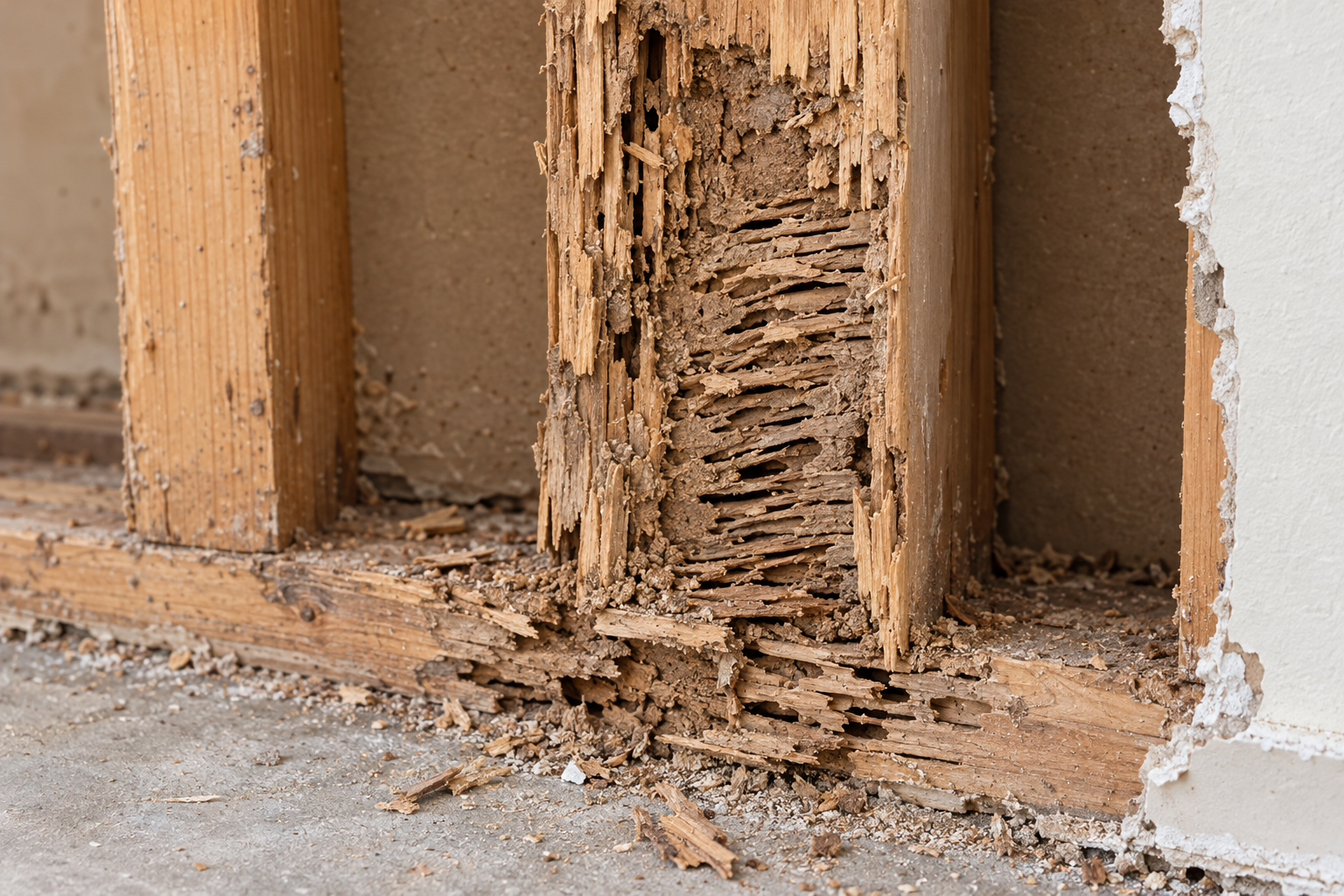
Termites hollow out walls, floors and framing for months or years before a sign appears, and they eat paper, books and plastic as well as wood.
Nearly all of their damage happens inside the wood, where you cannot see it. When it reaches the surface it looks like trim that sounds hollow, floors that feel soft and paint that bubbles.
The repair bill grows with the damage, which is why the cost of termites is mostly a question of how long they went unnoticed. The National Pest Management Association keeps homeowner guides on termites and the damage they cause.
- Months or yearsOf quiet feeding inside the framing
- Fires & stormsTermites do more structural damage than both combined
- Not just woodBoxes and books in storage get eaten too
Before we get there
A few things help the inspection along:
- Leave tubes, wings and frass as you found them
- Take a photo of each spot with your phone
- Skip the store-bought spray on what you see
- Note where and when you saw swarmers
Does waiting on termite signs raise the cost?
Yes, the longer termite signs go ignored, the more the treatment costs.
When termites go undetected, structural repair gets added on top of the treatment, because the colony has had that much longer in the walls and framing. A free estimate now is the cheapest point to find out what you have.
What neighbors say
Reviews from Tucson customers
Sean was helpful and explained in detail the type of termites we’re dealing with and how to best treat them. He explained where we had/didn’t have damage, what to look for in the future and why they were missed by the previous home owners. Highly recommend Sean and this company!
Great customer service. Arrived on time, answered questions I had.
RKC Pest Management LLC is excellent. Have had them for many years and no pests. Sean is very thorough and conscientious. Would definitely recommend this company without hesitation.
Found mud tubes, wings or frass?
Leave it where it is and give us a call
Tell us what you found and where. We will set a time to look, tell you which termite it is and quote the whole job before we start.
- Free, no-obligation estimates
- No surprise charges after the quote